





Introduction: The Po River Bridges in Turin — history, architecture and panoramic views
Crossing the Po in Turin is like stepping into an urban story where the river carves the city, riverbanks become promenades and every bridge opens onto fresh perspectives. The Po’s bridges are more than infrastructure: they’re witnesses to different eras, engineering feats and viewpoints that offer breathtaking panoramas of the baroque city and, on clear days, the Alpine backdrop. On foot, by bike or from the riverbank, watching Turin from these structures helps you understand how the city grew along the river, linking residential districts, parks, churches and iconic squares.
In this guide I’ll take you on a detailed, practical tour of the bridges that punctuate the Po in Turin: their architecture, history, exact locations and practical visiting tips, plus advice for getting the best photos and enjoying the views at the optimal times. You’ll find concrete pointers to nearby highlights — Piazza Vittorio Veneto, the Chiesa della Gran Madre di Dio, Parco del Valentino and the Mole Antonelliana — with full addresses, typical museum prices, and local recommendations to get the most out of your stroll.
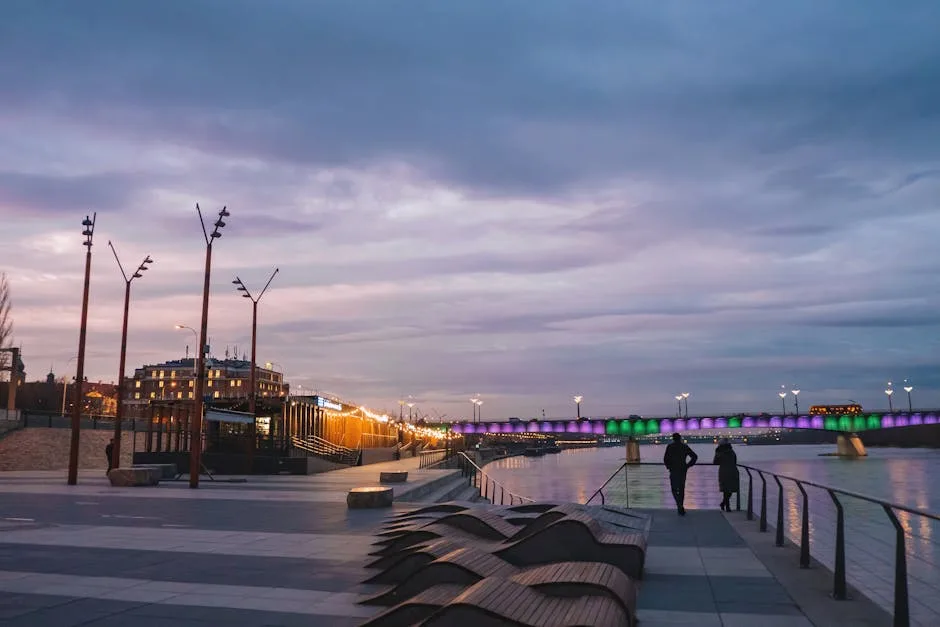
This is also a sensory guide: feel the Po’s breeze, hear water lapping against the bridge piers, spot rowing boats and kayaks, inhale the scent of riverside cafés and stop for an aperitivo on a terrace at sunset. The river shows very different faces depending on the season: the soft spring light, hot clear summer days with the Alps on the horizon, golden autumn tones or misty winter mornings that lend the arches a near-mystical aura. I’ll include visual cues and photo tips — best moments (golden hour, blue hour), angles for framing the Mole or the Gran Madre, and safety tips for cycling or walking.
This guide is for both visitors passing through and curious locals: you’ll find walking routes along the Po, practical information (exact addresses, prices in euros for nearby attractions, opening hours), and suggestions to extend your discovery (restaurants, cafés, useful transit stops). At the end you’ll find local recommendations to turn a simple crossing into a memorable experience. Pack comfortable shoes, your camera, and your curiosity: the Po’s bridges in Turin are ready to reveal the city through an architectural and panoramic lens.
Ponte Vittorio Emanuele I: historic heart and views toward the Gran Madre
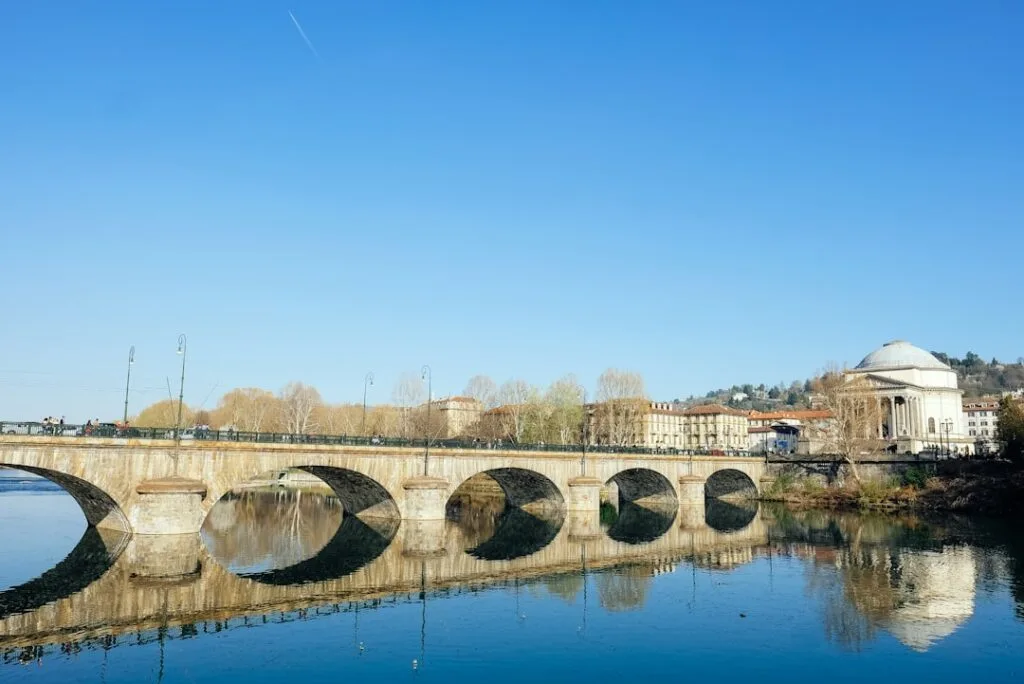
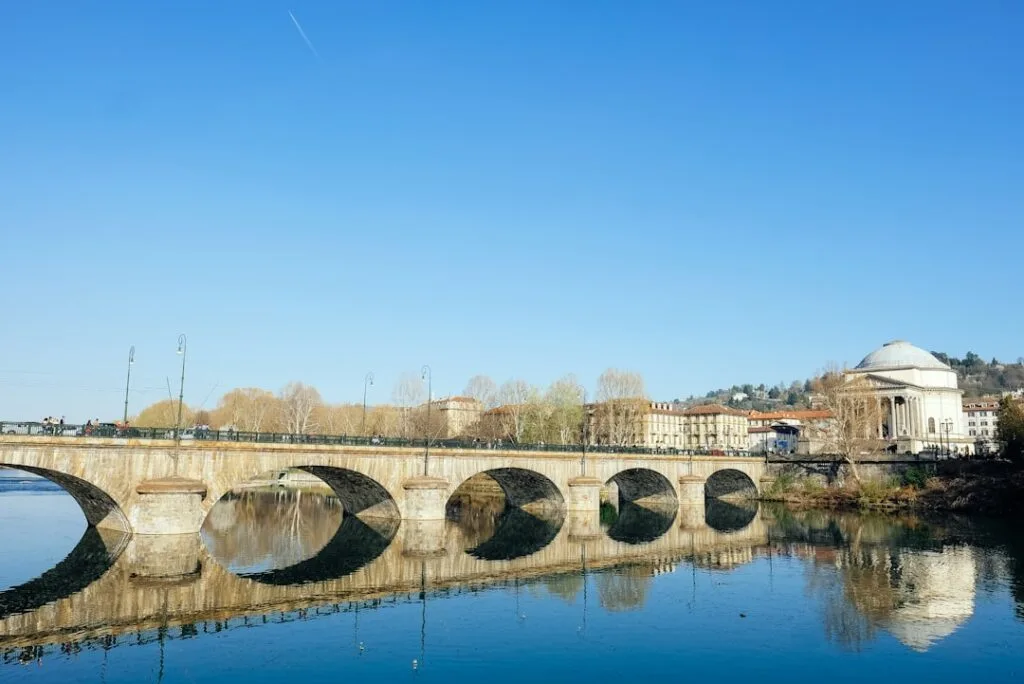
Ponte Vittorio Emanuele I is one of the most iconic crossings linking Turin’s historic center to the north bank of the Po and the stately Gran Madre neighborhood. Right next to Piazza Vittorio Veneto, it offers a direct view of the Chiesa della Gran Madre di Dio and the riverside belvedere. Landmark address: Piazza Vittorio Veneto, 10121 Torino TO, Italy. The bridge is easily reached on foot from XVIII Dicembre metro station or from Porta Susa station (Torino Porta Susa train station, Piazza Carlo Felice, 10121 Torino).
Architecture and details: the bridge features stone arches and decorated parapets that reflect 19th-century neoclassical tastes and urban planning that shaped Turin. Its width accommodates pedestrians, cyclists and vehicles, but walking across is the best way to enjoy the views. From the middle of the bridge, look upstream to spot the silhouette of the Mole Antonelliana (Via Montebello 20, 10124 Torino) on the right; downstream, the river gently curves toward greener areas.
Practical tips: for perfect light, visit at sunrise (roughly 6:00–7:30 depending on the season) or during the evening golden hour (about an hour before sunset). Nearby, grabbing a coffee at Caffè San Carlo (Piazza San Carlo 156, 10123 Torino) after your walk is a great idea. There’s no access fee to cross the bridge; however, respect bike lanes and pedestrian areas. Photo tip: place the Gran Madre slightly to the right of your frame and use a telephoto lens to compress the perspective and bring the Alpine chain closer in the background.
Nearby — recommended visits and opening times: the Chiesa della Gran Madre di Dio is at Piazza della Gran Madre di Dio, 10124 Torino TO. Typical opening hours: usually 9:00–19:00 (check on site as times vary). The Mole Antonelliana and the National Cinema Museum (Museo Nazionale del Cinema, Via Montebello 20, 10124 Torino) are a 15–20 minute walk from the bridge: adult ticket roughly €10–15 depending on exhibitions; typical opening hours 9:00–19:00 (later on some days). These references let you combine a stroll across Ponte Vittorio Emanuele I with a full cultural visit.
Ponte Regina Margherita and the green banks: walks and activities
Ponte Regina Margherita, another major crossing over the Po in Turin, connects tranquil residential neighborhoods and opens onto well-kept riverbanks popular for walking and exercise. Landmark address for the surrounding area: Corso Moncalieri / Lungotevere, right and left banks of the Po, 10125 Torino TO (exact access depends on which point along Corso you choose). This bridge gives direct access to Parco del Valentino, Turin’s best-known urban park located on the river’s south bank.
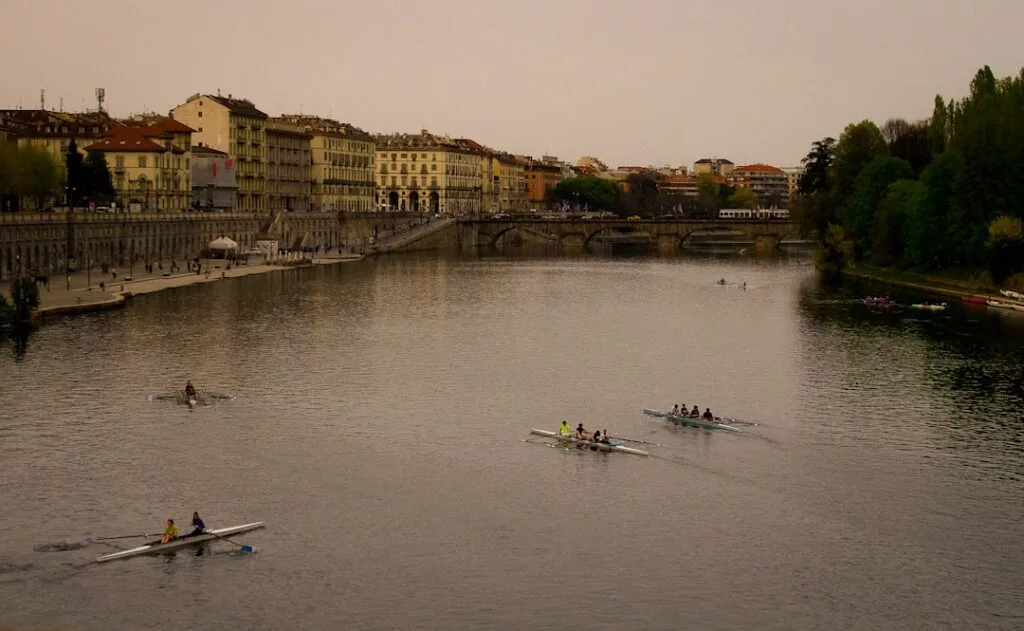
Description and use: Ponte Regina Margherita stands out for its clean lines and everyday usefulness: it’s commonly used by commuters but also makes an ideal starting point for riverside urban hikes. The banks on the Parco del Valentino side have bike paths and walking trails along the river, outdoor fitness zones and picnic areas. The park itself stretches along Corso Massimo d’Azeglio, 10126 Torino TO; free entry. It’s perfect for a nature break in the heart of the city, with the Borgo Medievale (Piazza Hohenlohe, 10126 Torino) located inside the park — entry usually around €6–8 for exhibitions (seasonal variations apply).
Hours and practical costs: riverbank access is free 24/7; however, on-site services (cafés, bike rentals, museums) have specific opening hours. Bike rental: services like ToBike or private operators along Parco del Valentino offer rates around €4–12 per hour depending on the bike type. The Borgo Medievale generally opens 10:00–19:00; adult price in 2024 about €6; discounts for students/children depending on the exhibition. For on-water activities (kayak, canoe), local operators run sessions €20–35 per person for 30–60 minutes; weekend booking recommended.
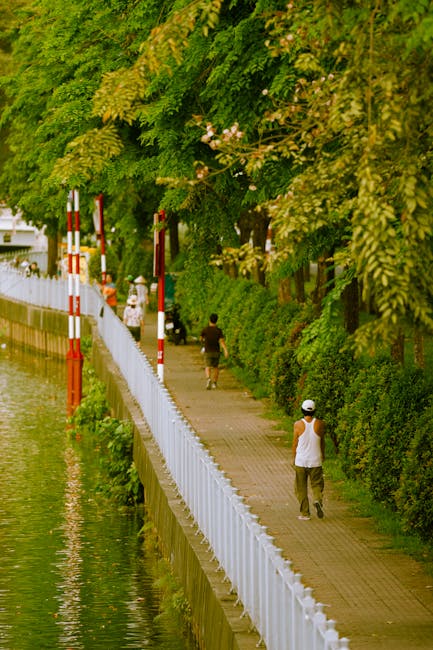
Local tips: bring water and suitable shoes if you plan to follow the river. In summer bring sun protection and sunglasses — the banks can be very exposed. For a typical Turin aperitivo after your walk, try bars along Via Po or around Piazza Vittorio Veneto: expect €6–10 for a Spritz or a drink. Photographers will find excellent compositions from the bridge and banks: runners, families, boats and the river perspective leading to the horizon.
Secondary bridges, modern upgrades and contemporary uses
Beyond the historic crossings, several secondary bridges span the Po and reflect evolving techniques and modern uses: some structures have been recently renovated to improve safety, accessibility for people with reduced mobility and the coexistence of different transport modes. These bridges often offer off-the-beaten-path viewpoints, ideal for walkers seeking calm or fans of contemporary architecture.
Examples of improvements: bicycle access ramps, separated cycle lanes, upgraded night lighting and panoramic benches. These interventions are often the result of partnerships between Turin’s municipality (Comune di Torino, Piazza Palazzo di Città 1, 10122 Torino) and local tourism stakeholders. Information on ongoing or upcoming works is published on the city’s official site and at tourist offices (Turin Tourist Office – Piazza Castello 101, opening hours 9:00–18:00; free information; city maps available).
Hours and safety: crossings are generally open 24/7, but some pedestrian access may be restricted during works. For night crossings, stick to the more central bridges (well-lit and frequently used). In case of extreme weather events (major Po flooding), the municipality may close certain accesses; follow local bulletins online and municipal notices.
Practical tips for modern visitors: book water activities in advance (local sites and operators), use mobility apps to locate shared bike and scooter stations (approximate prices: €1 unlock + €0.20–0.30/min for electric scooters). Secondary bridges also make great starting points for themed routes — for example, an “architectural walk” combining bridges, riverside villas and 19th-century residences, or a “foodie stroll” with stops at cafés and trattorie along Via Po and Corso Moncalieri.
Recommended routes: walks along the Po to see Turin differently
To make the most of the panoramas offered by the Po’s bridges, here are three recommended routes you can adapt to your time and mood: a short stroll (1–2 hours), an urban walk (half-day) and a full loop (full day). Each highlights one or more bridges as landmarks and includes addresses and practical tips.
- Short stroll (1–2 hours): Start at Piazza Vittorio Veneto (Piazza Vittorio Veneto, 10121 Torino). Cross Ponte Vittorio Emanuele I to reach the Chiesa della Gran Madre di Dio (Piazza della Gran Madre di Dio, 10124 Torino). Return along the south bank and enjoy cafés on Via Po. Tips: comfortable shoes, grab an espresso at a local bar (€1.20–2.50). Best time: morning or late afternoon.
- Urban walk (half-day): Start at Parco del Valentino (Corso Massimo d’Azeglio, 10126 Torino). Follow the river west past Ponte Regina Margherita, visit the Borgo Medievale (Piazza Hohenlohe, 10126 Torino; entry ~€6). Lunch at a local trattoria, then visit the Mole Antonelliana (Via Montebello 20, 10124 Torino; museum ticket ~€10–15). Hours: park and banks accessible at all times; Borgo Medievale 10:00–19:00.
- Full loop (full day): Start at Torino Porta Nuova station (Piazza Carlo Felice, 10121 Torino), follow Via Po to Piazza Vittorio Veneto, cross Ponte Vittorio Emanuele I, walk the north bank to the residential area of Borgo Po, return via Ponte Regina Margherita and finish at Parco del Valentino. Include lunch, coffee and a museum stop. Allow 6–8 hours; bring water and plan for lunch (average meal €15–30 depending on venue).
Extra tips: use an offline map (Google Maps or Maps.me) and check museums and café opening times before you set out. On weekends the banks get busy; for a more intimate experience, plan your walk on a weekday or early in the morning. Photographers should scout in advance for viewpoints that line up the Mole Antonelliana with the river; the golden hour provides warm tones and beautiful reflections on the Po.
Conclusion: Why the Po’s bridges deserve a careful exploration
The Po’s bridges in Turin are much more than crossing points: they’re urban observatories that tell the city’s story through stone, metal, light and the movement of water. Walking these bridges reveals a Turin that is both monumental and intimate — grand thoroughfares like Piazza Vittorio Veneto and the Mole Antonelliana sit alongside quiet riverbanks, lively parks and historic neighborhoods like Borgo Po. Each bridge offers a different, complementary perspective: some emphasize the city’s silhouette, others highlight natural spaces and riverside leisure.
Practically speaking, this guide has given you concrete references: full addresses (Piazza Vittorio Veneto, Piazza della Gran Madre di Dio, Via Montebello 20 for the Mole Antonelliana, Corso Massimo d’Azeglio for Parco del Valentino), approximate prices for museums and activities (National Cinema Museum ~€10–15, Borgo Medievale ~€6–8, bike rental €4–12/hour), and typical opening hours (museums generally 9:00–19:00; offices and tourist services 9:00–18:00). These details will help you plan visits and breaks without surprises. For safety and comfort: favor central bridges at night, follow municipal instructions during floods, and book (bikes, kayaks, museums) in high season.
Finally, the Po’s bridges lend themselves to many approaches: an architectural visit to understand materials and styles, a sensory walk to soak up Turin’s atmosphere, or a photo outing to capture the city under changing light. Whether you’re just passing through or staying longer, take the time to cross these bridges on foot, lean on their parapets and watch the city unfold along the river and out to the horizon. You’ll leave convinced that the Po — far from mere backdrop — is one of the keys to reading Turin’s soul.